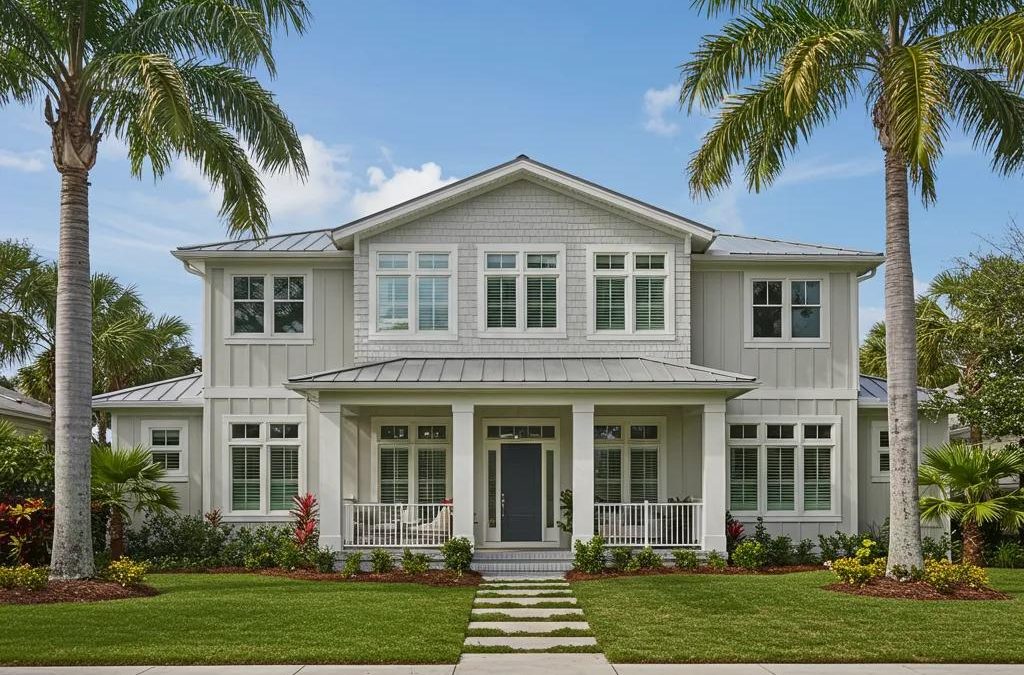
Florida Home Builders: Your Complete Guide to Building Quality Homes in Florida
Embarking on a home build in Florida means navigating a landscape of diverse builder models, fluctuating budgets, intricate regulations, and shifting market dynamics—all before the first foundation stake is driven. This comprehensive guide will equip you to align your vision with the ideal Florida home builders, project realistic costs, follow a clear construction roadmap, adhere to the latest building codes, and capitalize on market trends. We’ll delve into:
- The four primary builder categories and their specific expertise
- Cost considerations, from per-square-foot pricing to premium luxury enhancements
- A detailed, step-by-step construction timeline
- Florida Building Code mandates and hurricane-resistant construction standards
- Essential criteria for selecting a builder, including warranty provisions and reputation
- Current market trends influencing inventory, financing, insurance, and buyer demand
- Profiles of leading builders, highlighting their community offerings, customization options, and energy-efficient solutions
With this roadmap in hand, you’ll be empowered to plan, budget, and partner with a builder who consistently delivers quality, compliance, and the home you’ve always envisioned.
What Are the Different Types of Florida Home Builders?
Florida home builders generally fall into distinct categories, each catering to specific budget ranges, customization desires, and project scales. Understanding these four primary types will clarify your options and help you identify the model that best suits your priorities, whether you seek complete design freedom, a streamlined construction process, or exclusive waterfront living.
Each builder category addresses distinct homeowner goals, from the unparalleled design freedom offered by custom builders to the cost-effectiveness of volume builders. Next, we’ll explore the defining characteristics of each category and their most suitable applications.
What Defines a Custom Home Builder in Florida?
Custom home builders specialize in delivering a completely bespoke construction experience, transforming unique client visions into tangible architectural realities. They typically collaborate with architects and engineers to develop individualized floor plans, select specialized materials, and integrate advanced systems, such as smart-home technology or renewable energy solutions. While this approach results in a singular residence, it necessitates extended planning periods, higher budgets, and direct client involvement in design decisions. The reward for clients is unparalleled creative control and precise alignment with their lifestyle needs, culminating in tailored quality and distinctive character in every square foot.
How Do Semi-Custom Home Builders Operate in Florida?
Semi-custom home builders present clients with a curated selection of proven floor plans, offering selective modifications to room layouts, exterior aesthetics, or interior finishes. This model streamlines the decision-making process by utilizing standardized structural components while still allowing homeowners a degree of personalization, such as choosing appliance packages or specific window styles. The approach combines the efficiencies of production building—like bulk material purchasing and established subcontractor relationships—with enhanced design flexibility, thereby reducing risk and budget unpredictability compared to fully custom projects. Homeowners benefit from a harmonious balance of creative input and efficient construction timelines.
What Are Production Home Builders and Their Advantages in Florida?
Production home builders construct numerous homes using a limited range of repeatable designs, leveraging bulk material procurement and assembly-line-inspired construction methods. This volume-driven strategy significantly reduces material costs and labor redundancies, leading to a lower average price per square foot, often falling between $150 and $250 for standard single-family homes. Production builders frequently develop entire communities, offering consistent home packages across multiple neighborhoods. The primary advantages include accelerated build times, predictable pricing, and a turnkey move-in experience, making this an attractive option for budget-conscious buyers who prioritize value and efficiency over highly customized details.
Which Florida Home Builders Specialize in Luxury and Waterfront Homes?
Luxury and waterfront home specialists possess deep expertise in utilizing high-end materials, developing expansive properties, and executing site-specific engineering, such as elevated foundation systems or integrated seawalls. These builders are adept at navigating coastal zoning regulations and flood-plain requirements, incorporating features like hurricane-impact windows, reinforced roofing systems, and premium finishes such as natural stone or imported cabinetry. Their process emphasizes collaborative design studio sessions, personalized interior design consultations, and the inclusion of high-end amenities, like private docks or resort-style outdoor living spaces. Clients receive bespoke estates meticulously designed for prime Florida waterfront locations, seamlessly blending luxurious aesthetics with essential code-mandated resilience.
Understanding these builder categories provides a solid foundation for accurate cost projections and effective process planning. Let’s now turn our attention to the crucial aspect of budgeting.
How Much Does It Cost to Build a Home in Florida?
The cost to build a home in Florida typically ranges from $150 to $350 per square foot, a figure that varies based on location, the builder’s category, and the chosen level of finishes. This per-square-foot metric generally covers core construction elements, but your overall budget must also account for land acquisition, permitting fees, site preparation, and any high-end upgrades. Accurately forecasting these variables is essential to prevent budget overruns and to guide your selection of the most suitable builder and home type.
This detailed breakdown empowers investors and prospective homeowners to allocate funds effectively across key cost drivers and align their builder selection with realistic budget constraints. In the following section, we will dissect each specific expense category in greater detail.
What Is the Average Cost Per Square Foot for Florida Home Construction?
On average, new home construction in Florida typically falls between $150 and $200 per square foot for standard, production-style homes. Semi-custom projects often increase to the $200–$250 per square foot range, while fully custom or luxury builds can easily exceed $300 per square foot. This per-square-foot rate generally encompasses essential elements like framing, roofing, mechanical systems, and basic interior/exterior finishes, serving as a foundational baseline for more detailed budget planning.
How Do Land and Permit Costs Affect Florida Home Building Budgets?
Land acquisition and permitting represent significant fixed costs in the home-building process. Land prices can range dramatically, from under $50,000 in inland counties to upwards of $500,000 in desirable coastal markets. Permit fees, typically ranging from 1% to 4% of the total construction value, cover essential services such as plan reviews, site inspections, impact fees, and utility connections. Site-specific conditions, like the need for wetland mitigation or the installation of septic systems, can further escalate these non-construction expenses, underscoring the critical importance of thorough due diligence early in the process.
How Do Coastal vs. Inland Locations Impact Building Costs in Florida?
Coastal properties often necessitate specialized construction techniques, such as elevated foundation systems, impact-rated glazing, and engineered seawalls, which can increase foundation and material costs by 10–20% compared to inland builds. While inland projects may avoid the stringent mandates of High-Velocity Hurricane Zones (HVHZ), they can still encounter other zoning or soil-bearing considerations. Opting for an inland location can reduce the need for extensive structural enhancements, whereas coastal living inherently demands premium resilience features and often results in higher insurance premiums.
What Are the Typical Costs for Luxury and Custom Homes in Florida?
Premium custom homes in Florida typically average between $250 and $350 per square foot. This higher cost is driven by bespoke architectural elements, custom millwork, integrated smart home systems, and the use of top-tier materials like natural stone and high-end appliances for gourmet kitchens. For luxury waterfront estates, budgets frequently surpass $400 per square foot once factors such as private docks, extensive landscaping, and specialized foundation engineering are included. These exceptional builds offer unparalleled personalized design, advanced energy efficiency, and strong resale value, reflecting the significant investment in tailored quality and craftsmanship.
Having a clear understanding of the budget informs both the construction timeline and the builder selection process. Let’s now map out the typical home-building journey.
What Is the Step-by-Step Florida Home Building Process?
A successful home construction project follows three primary phases: pre-construction, construction, and post-construction, each marked by distinct milestones. Maintaining clear sequencing and close coordination with your builder will streamline approvals and keep the project on schedule, typically spanning 9–18 months from land acquisition to final move-in.
- Pre-Construction Planning
Secure necessary financing, finalize lot purchase agreements, engage architects and designers, and develop comprehensive permit-ready plans. - Site Preparation & Foundation Work
Clear and grade the building site, install essential utilities, pour concrete footings, and construct the foundation (options include slab, crawl-space, or pier foundations). - Framing, MEP Installation & Finishes
Erect the structural framework, install mechanical, electrical, and plumbing (MEP) systems, enclose the structure to make it weather-tight, and then apply interior and exterior finishes. - Final Inspections & Occupancy Permit
Successfully pass all required municipal inspections for structural integrity, MEP systems, and code compliance, obtain the certificate of occupancy, and complete a final walkthrough to address any outstanding items.
This structured approach is designed to minimize unforeseen issues and maintain project momentum, guiding you seamlessly from initial concept through to final occupancy.
What Happens During Pre-Construction Planning in Florida?
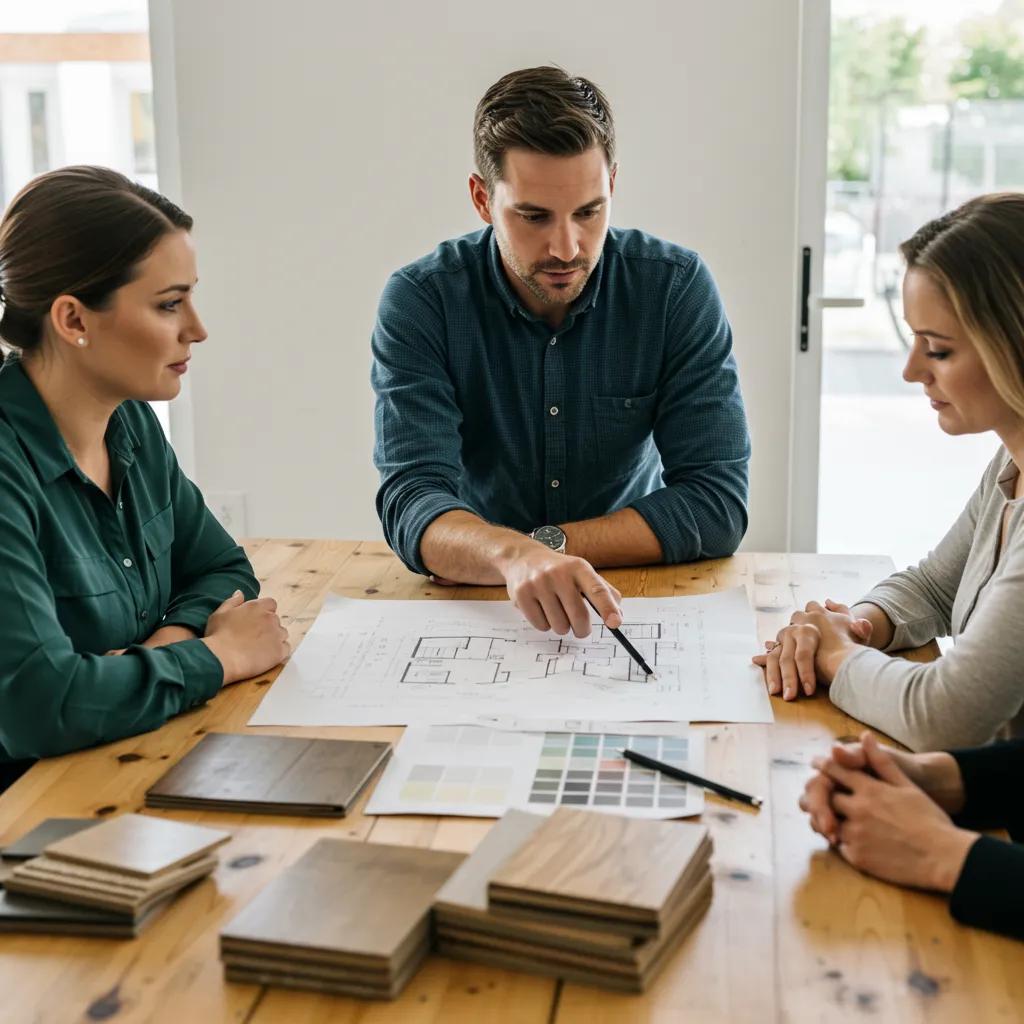
The pre-construction phase involves finalizing financing arrangements, securing the chosen lot, and refining the home’s architectural plans. Architects produce detailed construction documents that comply with the Florida Building Code 8th Edition, while builders solicit bids from subcontractors and schedule the submission of permit applications. This crucial phase establishes the critical foundations for effective cost management and regulatory adherence, ensuring a smooth transition to the actual groundbreaking.
How Is Site Preparation and Foundation Work Done in Florida?
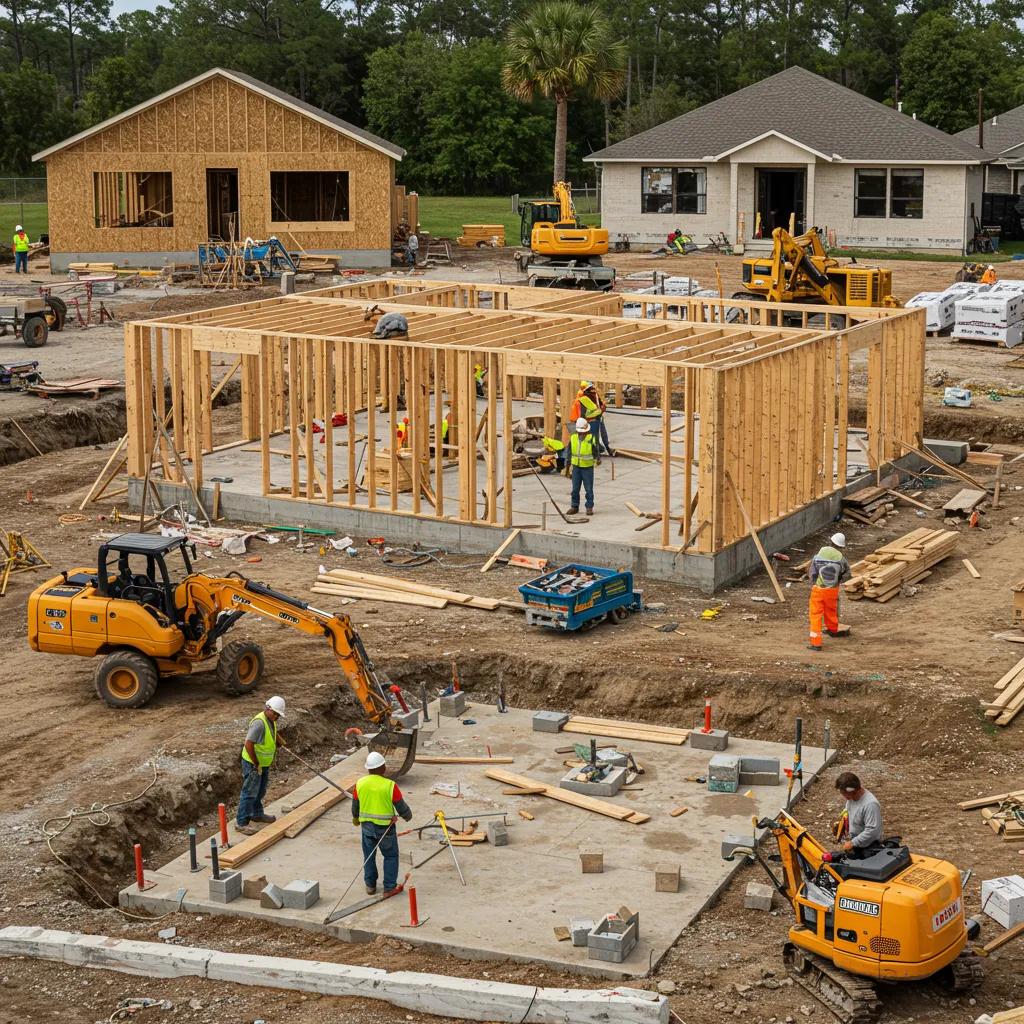
Site preparation commences with clearing vegetation, grading the land to ensure proper drainage, and implementing effective erosion control measures. Foundation types vary depending on soil conditions and flood zone designations, with common options including monolithic concrete slabs and elevated piling systems. Concrete footings and reinforced rebar provide the essential structural base, while waterproofing and termite treatment applications are implemented to ensure long-term durability and protection.
What Are the Key Steps in Framing, MEP Installation, and Finishes?
Framing crews are responsible for erecting the load-bearing walls, roof trusses, and exterior sheathing, effectively shaping the home’s structural shell. Following this, mechanical, electrical, and plumbing (MEP) teams install the necessary ductwork, wiring, and piping systems. Once the structure is made weather-tight, various trades complete the insulation, drywall installation, cabinetry, flooring, and exterior siding. The final selection of finishes, such as paint colors, countertop materials, and fixtures, brings the overall design vision to life.
How Do Final Inspections and Occupancy Permits Work in Florida?
Upon completion of construction, municipal inspectors conduct thorough reviews to verify compliance with all applicable structural, fire safety, electrical, plumbing, and mechanical codes. Successfully passing these inspections results in the issuance of a certificate of occupancy, which legally permits the home to be inhabited. A final walkthrough is then conducted to address any punch-list items and confirm that the home meets all contractual specifications before the project is officially closed out.
With a clear understanding of the construction process, let’s now examine how Florida’s stringent building codes influence every phase of construction.
How Do Florida Building Codes Affect Home Construction?
The Florida Building Code (FBC) 8th Edition (2023) establishes the comprehensive design and construction standards applicable throughout the state, mandating specific resilience measures against wind, flood, fire, and structural stresses. Strict adherence to these codes is essential for ensuring occupant safety, qualifying for insurance coverage, and meeting lender requirements, making code integration a non-negotiable aspect of every construction project.
What Are the Key Requirements of the Florida Building Code 8th Edition (2023)?
The FBC 8th Edition integrates national model codes with specific amendments tailored to Florida’s unique environmental conditions. Key requirements include adherence to wind-load design standards as outlined in ASCE 7, energy efficiency measures in accordance with Chapter 13, and provisions for barrier-free accessibility. Detailed regulations also address critical aspects such as roof tie-down methods, the installation of hurricane straps, and standards for impact-resistant glass.
How Do Hurricane-Resistant Standards Influence Florida Home Designs?
Hurricane-resistant standards, including those specified in TAS 201, 202, and 203, mandate rigorous testing for shutters, doors, and windows to ensure they can withstand the impact of windborne debris. Homes built in accordance with these standards require reinforced structural connections, such as hurricane clips, load-bearing anchors, and a continuous load path extending from the roof down to the foundation. While these features may increase initial construction costs, they significantly enhance the home’s structural resilience and improve its eligibility for favorable insurance rates.
What Are Flood Zone and Zoning Regulations for Florida Home Builders?
Flood zone regulations categorize properties based on their assessed risk levels, typically designated by zones such as A, AE, or VE. Builders are required to elevate finished floors above the established base flood elevation, incorporate flood vents, and utilize flood-resistant materials for any construction below the threshold elevation. Additionally, zoning ordinances dictate crucial site development parameters, including lot coverage limits, required setbacks from property lines, and land-use designations, all of which influence the overall site layout and the building’s footprint.
Who Oversees Building Code Compliance in Florida?
The Florida Building Commission is responsible for the adoption and ongoing updates of the building codes. However, the day-to-day oversight of code compliance is managed by local building departments, which issue permits, conduct plan reviews, and perform site inspections throughout the construction process. In some cases, certified third-party inspectors may be engaged to supplement municipal oversight, particularly for specialized systems, ensuring adherence to all FBC standards and amendments at every stage of construction.
With regulatory requirements clearly outlined, the next critical step is selecting a builder whose expertise and service approach align perfectly with your project objectives.
How to Choose the Right Florida Home Builder for Your Project?
Selecting the ideal builder involves a thorough evaluation of their experience, industry reputation, communication protocols, warranty terms, and the transparency of their construction process. Asking pertinent questions and carefully reviewing their past project performance will help ensure you partner with a reliable team capable of completing your project on time, within budget, and in full compliance with Florida’s rigorous building standards.
- Inquire about the builder’s proven track record with similar home types and budget parameters.
- Verify their current licensing, insurance coverage, and professional affiliations.
- Request detailed project timelines and a clear explanation of their cost-control procedures.
- Compare the specifics of their warranty coverage for structural, mechanical, and finish components.
By diligently vetting these essential criteria, you can identify a builder who not only matches your vision but also possesses the expertise to confidently navigate Florida’s complex regulatory landscape.
What Questions Should You Ask a Florida Home Builder?
Initiate conversations with builders by posing questions that effectively reveal their process clarity and accountability:
- “Could you share how many homes of a similar size and type you’ve completed in the last two years?”
- “What is your typical build duration, from permit issuance to final occupancy?”
- “Can you provide a detailed overview of your warranty coverage and the support offered post-occupancy?”
- “How do you manage change orders and contingency planning within the project budget?”
These inquiries are designed to expose a builder’s operational strengths, communication practices, and risk-management strategies—all critical factors in making an informed builder selection.
How Do Florida Home Builder Reviews and Ratings Help Your Choice?
Online reviews and industry ratings serve as valuable social proof, offering insights into customer satisfaction levels, quality standards, and builder responsiveness. Ratings found on third-party platforms often highlight trends related to punctuality, craftsmanship quality, and the effectiveness of warranty fulfillment. Prioritizing builders who consistently receive positive feedback significantly increases the likelihood of experiencing a smooth and transparent build process.
What Builder Warranties and Guarantees Are Common in Florida?
Most reputable Florida home builders typically offer the following warranty provisions:
- A comprehensive 10-year structural warranty covering the foundation, framing, and roof integrity.
- Limited warranties ranging from two to five years on mechanical, electrical, and plumbing systems.
- One-year coverage for interior finish items, such as drywall, paint, and cabinetry.
These robust warranty packages demonstrate a builder’s confidence in their workmanship and provide essential protection for homeowners after the project is completed.
With established criteria for selection, let’s now shift our focus to the market dynamics that significantly influence build timing, overall costs, and the eventual resale value of your new home.
What Are the Current Florida Housing Market Trends Impacting Home Building?
Florida’s housing market continues to exhibit dynamic activity, fueled by consistent population growth, strong demand from retirees, and ongoing international investment. Staying informed about inventory levels, median home prices, prevailing borrowing costs, and insurance trends is crucial for both builders and buyers to optimize timing, refine design choices, and manage financial planning effectively.
How Are Inventory Levels and Median Home Prices Changing in Florida?
Inventory levels have seen a gradual increase, which has helped to ease competition in certain regions and stabilize price appreciation. Median home prices have settled into a range of approximately $405,000 to $415,000 as of mid-2025, reflecting a growing balance between the supply of new communities and the persistent demand driven by population migration.
What Is the Impact of Mortgage Rates on Florida Home Construction?
Mortgage interest rates, currently hovering near the 6.3% mark, significantly influence loan affordability and the resulting monthly payments for homebuyers. Higher interest rates can potentially reduce purchasing power, leading some buyers to consider building new homes with locked-in fixed rates as an alternative to competing in the existing resale market.
How Do Homeowners Insurance Premiums Affect Florida Home Builders and Buyers?
The escalating cost of homeowners insurance premiums, particularly in coastal and hurricane-prone areas, is a major driver for increased demand for wind-resistant construction techniques, impact-rated glazing, and elevated foundation designs. Builders are increasingly incorporating these features to help clients qualify for more favorable insurance rates, which directly impacts design budgets and influences buyer decisions.
What Are the Forecasts for Florida’s Housing Market and Building Demand?
Industry analysts are forecasting a period of continued stabilization for Florida’s housing market, without anticipating a significant downturn. This positive outlook is supported by ongoing demographic inflows, a steady stream of retiree relocations, and sustained employment growth. Demand for new residential construction is expected to remain robust, with a particular emphasis on homes that are both resilient and energy-efficient.
Having a clear perspective on the current market conditions sets the stage for a focused examination of leading builders and the distinct offerings they provide.
Who Are the Top Florida Home Builders and What Do They Offer?
Florida’s prominent home builders cater to a wide spectrum of the market, from high-volume communities to meticulously planned luxury estates. Evaluating their specific specialties and the characteristics of their communities can help buyers effectively narrow down their options based on preferred location, target price point, and desired level of customization.
What Are Lennar Homes’ Key Features and Community Offerings in Florida?
Lennar Homes is renowned for its production communities featuring an innovative “Everything’s Included” approach, which standardizes high-end finishes—such as granite countertops, stainless steel appliances, and smart-home lighting systems—at no additional cost. Their diverse neighborhoods are situated in both coastal and inland regions, offering a range of floor plans from 1,200 to 3,500 square feet, complemented by community amenities like clubhouses, swimming pools, and fitness centers.
How Does D.R. Horton Provide Affordable and Diverse Florida Homes?
D.R. Horton focuses on delivering value-driven single-family homes and townhouses across Florida’s major metropolitan areas. Their approach emphasizes streamlined designs, a variety of price points, and attractive buyer incentives, including assistance with closing costs and mortgage rate buydowns, positioning them as a leading choice for first-time homebuyers and budget-conscious buyers seeking reputable volume builders.
What Customization and Energy Efficiency Does Pulte Homes Provide?
Pulte Homes excels in offering semi-custom modifications and incorporating advanced energy-efficient features. These include high-performance HVAC systems, ENERGY STAR-rated appliances, and roof designs prepped for solar panel installation. Their dedicated design studios guide homeowners through the personalization process, allowing for significant customization without the premium costs typically associated with fully custom builds.
How Does Taylor Morrison Serve Luxury and Master-Planned Communities?
Taylor Morrison specializes in developing upscale neighborhoods that feature resort-style amenities, such as championship golf courses, scenic golf cart paths, and gourmet kitchen packages. Their custom residences are distinguished by designer interior collections, spa-inspired master suites, and sophisticated home automation systems, catering to buyers who seek both an enriched community lifestyle and architectural prestige.
What Makes ICI Homes a Leader in Custom Florida Home Building?
ICI Homes distinguishes itself by offering 100% customizable floor plans, supported by in-house architectural studios and direct collaboration with homeowners. Clients have the flexibility to select from numerous structural options, including extended lanais, elevator shafts, and bonus rooms. Furthermore, they provide energy-efficient upgrades through their Go Green packages, reinforcing ICI Homes’ strong reputation for delivering personalized and sustainable custom residences.
These builder profiles effectively illustrate the broad spectrum of available options, ranging from production-level value to bespoke luxury, enabling you to align builder strengths with your specific project vision.
By thoroughly understanding the different builder types, associated costs, construction processes, regulatory requirements, selection criteria, market trends, and the offerings of top builders, you are well-equipped to proceed with confidence. Your next strategic step should involve requesting detailed cost estimates and scheduling model home tours, ensuring that your chosen Florida home builder can successfully transform your dream into a resilient, expertly crafted reality.